< 일러스트 OpenAI의 DALL·E 제공 >
[객원 에디터 10기 / 김시헌 기자] As the world moves closer to 2026, excitement for the next FIFA World Cup is steadily growing around the world. Fans from different countries are already looking ahead to the matches, the players, and the distinctive atmosphere that only the World Cup can create. Held once every four years, the World Cup is not a simple football tournament; rather, it is a global event that brings people together. The 2026 World Cup is expected to be especially remarkable because it represents a new era in the history of the sport through its unprecedented scale.
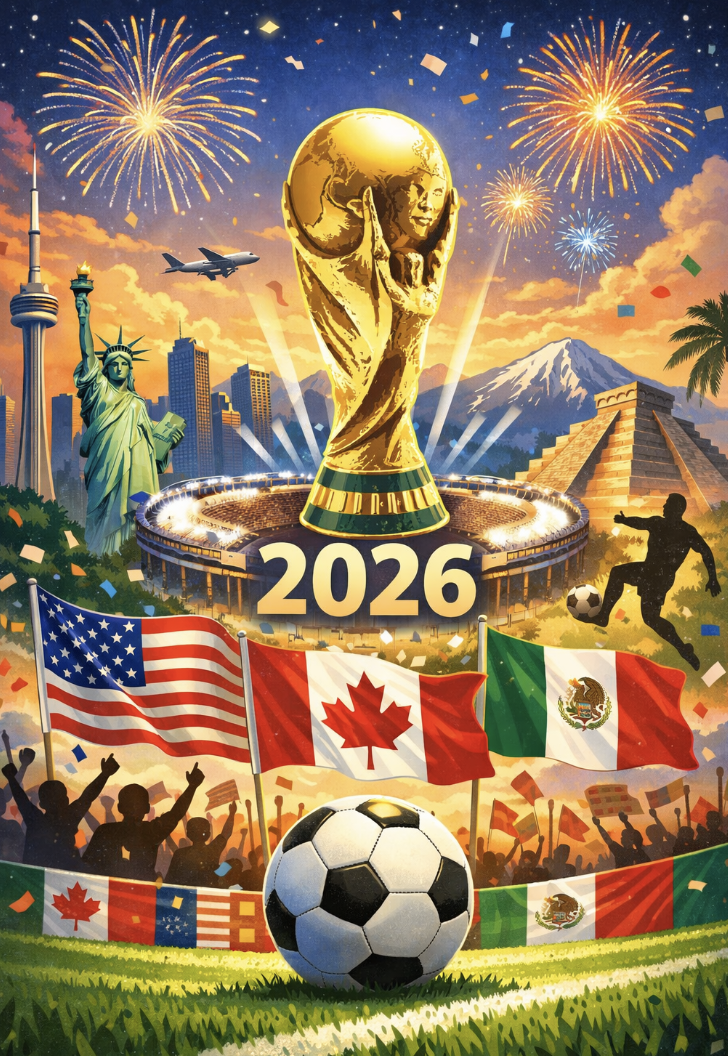
One of the major changes is the scale of the World Cup. For the first time ever, the tournament will be hosted by three countries: the United States, Canada, and Mexico. This joint hosting is unprecedented and shows how large and complex this event has become. Matches will take place across many cities in North America, turning an entire continent into a shared football stage. This format allows fans to experience different cultures, environments, and traditions within a single World Cup.
Another major change is the expansion of participating teams. The 2026 World Cup will include 48 national teams instead of the traditional 32. This expansion increases global representation and gives more countries the opportunity to compete at the highest level. Teams from regions that were previously underrepresented, such as Africa, Asia, and smaller football nations, now have a better chance to qualify. As a result, the tournament will be more diverse and unpredictable, making it even more exciting for fans around the world.
The 2026 World Cup is also expected to set new standards in terms of infrastructure and technology. Many of the stadiums are high-capacity venues with advanced facilities. In addition, improvements in broadcasting, digital media, and online platforms will allow fans to follow the tournament more closely than ever before. Even those who cannot attend matches in person will be able to enjoy high-quality coverage and real-time updates, making the World Cup more accessible on a global scale.
Beyond football itself, the importance of the 2026 World Cup lies in its cultural and social impact. Throughout the history of the World Cup, this event has been a symbol of unity, bringing together people of different languages, backgrounds, and beliefs through a shared love of football. With more teams and host cities involved, the 2026 tournament has the potential to strengthen international connections and promote mutual understanding among nations.
As the countdown to 2026 continues, it is clear that this World Cup will be remembered as a turning point in football history. Its massive scale, inclusive format, and global reach highlight how the sport continues to evolve. The 2026 World Cup is not only a competition to determine the best team in the world, but also a celebration of football as a truly global game.