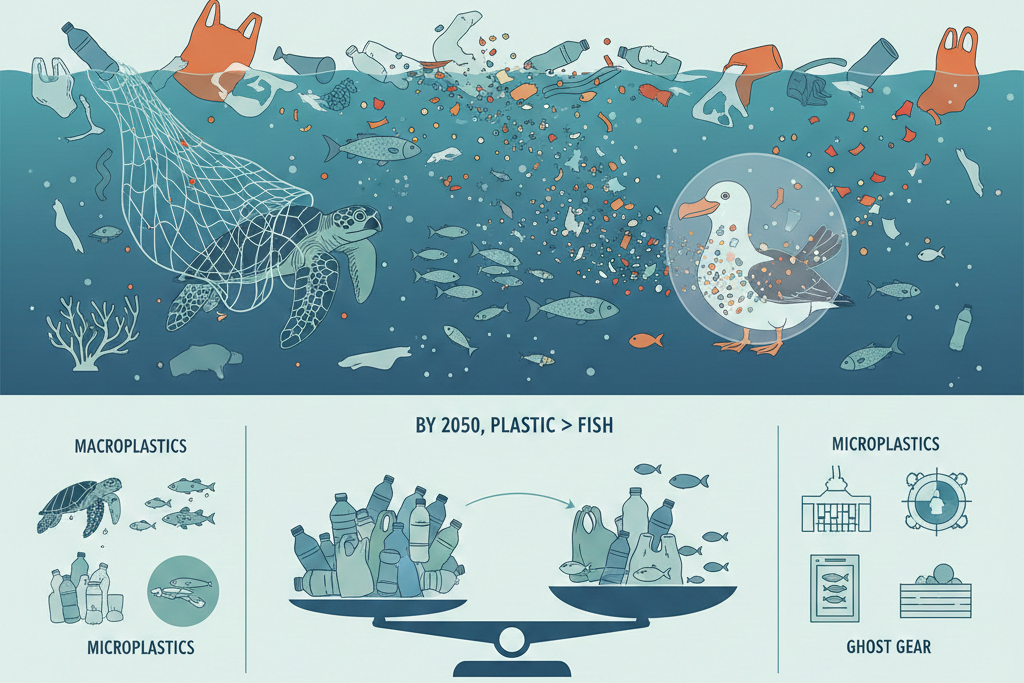
< 일러스트 OpenAI의 DALL·E 제공 >
[객원 에디터 10기 / 김예슬 기자] Also referred to as marine litter, ocean litter poses a serious threat to the environment. Some scientists warn that by 2050, the amount of plastic in the oceans could outweigh the total mass of fish.
According to the United Nations Environment Programme, marine litter is defined as “any persistent, manufactured, or processed solid material discarded, disposed of, or abandoned in the marine and coastal environment.”
Each year, millions of tonnes of plastic are dumped into the ocean, causing catastrophic consequences for marine ecosystems. The GUD website reports that the world’s oceans now contain approximately 5.25 trillion pieces of plastic debris—about 46,000 pieces per square mile on average. As a result, more than one million seabirds and 100,000 marine animals are estimated to die annually due to plastic pollution.
This overwhelming accumulation of plastic severely harms marine life. Many marine animals ingest plastic, leading to serious health complications, while others become trapped in discarded containers, according to the International Maritime Organization (IMO). Furthermore, the National Oceanic and Atmospheric Administration (NOAA) warns that heavy metals and other contaminants from plastics can accumulate in seafood, posing health risks to humans.
Beyond its environmental and public health impacts, marine litter also presents economic and safety concerns. The IMO notes that plastic debris creates costly and dangerous conditions for maritime transport, as it can obstruct navigation and become entangled in ship propellers and rudders.
In response, countries around the world have taken action to reduce plastic waste and combat ocean pollution. Recognizing the growing severity of marine litter, governments have implemented measures ranging from local initiatives to national policies.
At the local level, efforts include beach cleanups, improved waste management systems, and public awareness campaigns. On a national scale, many countries have introduced bans or taxes on single-use plastics, established deposit-refund systems, designated marine protected areas, and supported research and monitoring initiatives.
International organizations have also played a crucial role in addressing marine litter. The IMO, for instance, pioneered the prohibition of plastic disposal from ships at sea more than three decades ago through international maritime regulations. Alongside organizations such as NOAA, the IMO has long advocated for global action against marine pollution.
Through clear guidelines and actionable plans, these organizations encourage individuals, industries, and governments to take responsibility and end careless littering, emphasizing that protecting the oceans requires collective and sustained effort.