<일러스트: Google Gemini 제공>
[객원 에디터 10기 / 김예슬 기자] Today, we highly depend on fossil fuels to drive our energy sources. We burn large amounts of them to gain our supply of energy. In return, high amounts of carbon are released into the air. The concentration of carbon in the atmosphere has been rising exponentially over the past few years. These levels have been fatal to the environment, contributing to global warming and environmental degradation.
Below are some remarks by environmental experts on the urgency of taking action towards global warming:
EEA Executive Director: Leena Ylä-Mononen:
“We cannot afford to lower our climate, environment and sustainability ambitions. Our State of Environment Report, co-created with 38 countries, clearly sets out the science-based knowledge and demonstrates why we need to act. In the European Union, we have the policies, the tools and the knowledge, and decades of experience in working together towards our sustainability goals. What we do today will shape our future.”
Executive Vice-President for a Clean, Just and Competitive Transition: Teresa Ribera:
“This report is a stark reminder that Europe must stay the course and even accelerate our climate and environmental ambitions. Recent extreme weather events show how fragile our prosperity and security become when nature is degraded and climate impacts intensify. Delaying or postponing our climate targets would only increase costs, deepen inequalities and weaken our resilience. Protecting nature is not a cost; it is an investment in competitiveness, resilience and the well-being of our citizens. By scaling up action now, we can build a cleaner, fairer and more resilient Europe for future generations.”
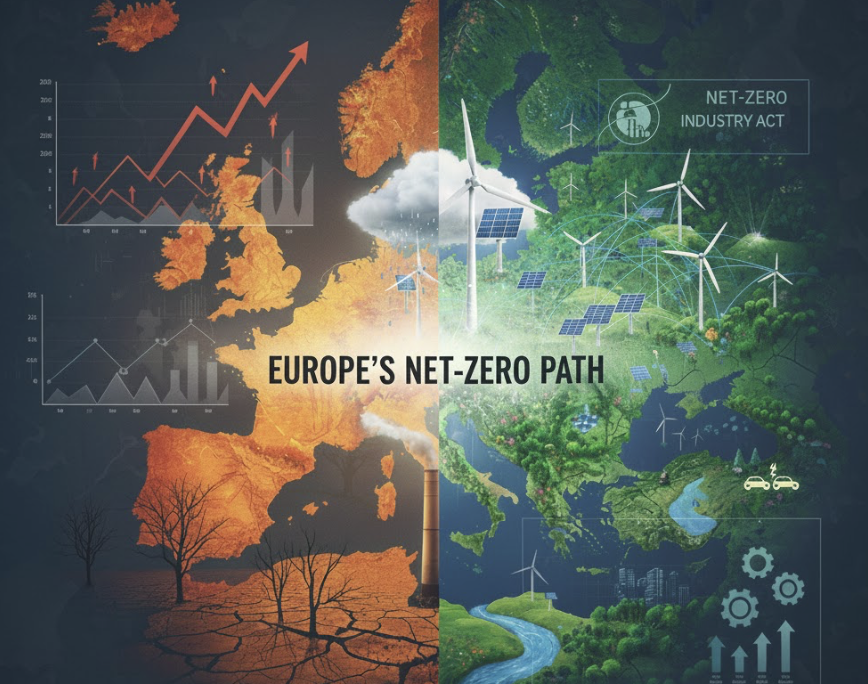
These reports have been extraordinarily concerning on Europe’s side. Europe has been found to be the fastest-warming continent on Earth. It threatens health, ecosystems, and the economy. Experts urge Europe to step up the implementation of policies and longer-term sustainability-enabling actions. “Europe’s Environment 2025 is the most comprehensive analysis of the current state and outlook for the continent’s environment, climate and sustainability, building on data from across 38 countries.”
The European Union has proved to be a world leader in climate efforts, doubling the share of renewables while reducing greenhouse gas emissions and fossil fuel use.
Amid these efforts, challenges remain demanding. First and foremost, biodiversity is declining across the continent because of “unsustainable production and consumption patterns.” The deterioration of Europe’s biodiversity and ecosystems is expected to continue without strict policy incorporation. Moreover, Europe’s water resources, compared with the high demand, have very little to offer. “Maintaining healthy aquatic ecosystems, protecting watersheds and ensuring that groundwater resources are replenished is crucial to ensuring Europe’s future water resilience,” the report says.
In order to work toward solving this problem, the Net-Zero Industry Act was created. It stems from the Green Deal Industrial Plan, which aims to “scale up the manufacturing of clean technologies in the EU.” It is increasing the EU’s manufacturing capacity for devices that support clean energy sources and release low, zero, or negative greenhouse gases in operation. This Act will hopefully attract investors and expand market access for clean technology in the EU.