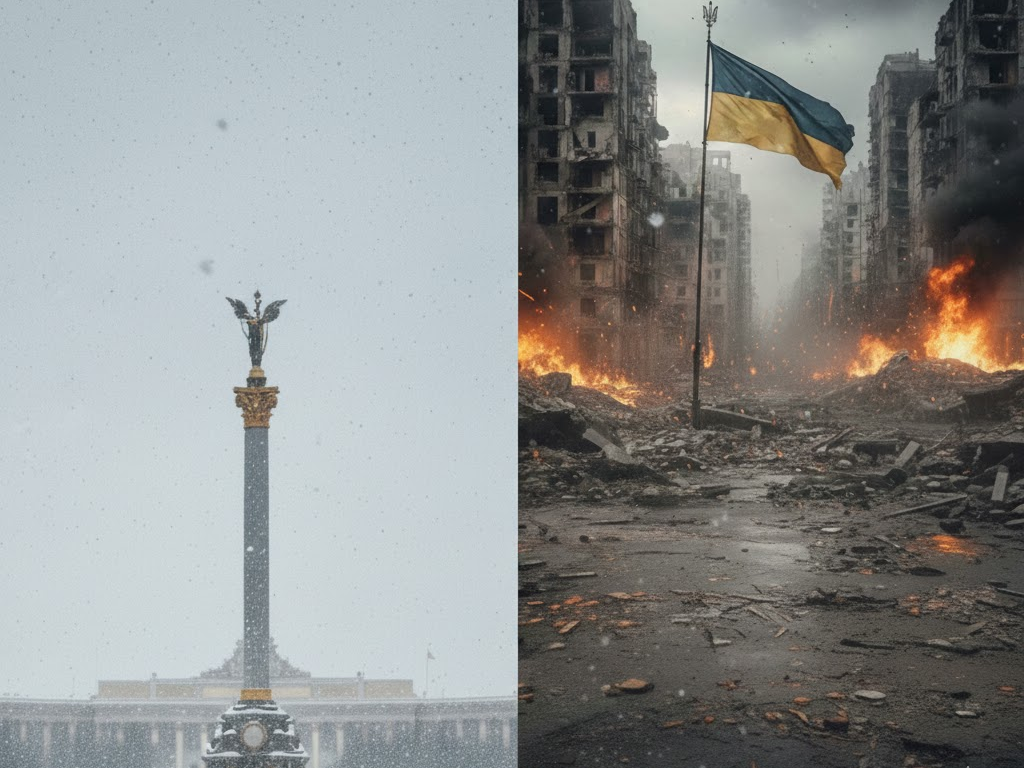
< 일러스트 구글 Gemini 제공 >
The deep history between Russia and Ukraine
[객원 에디터 10기 / 김예슬 기자] There are various perspectives on what happened between Ukraine and Russia and the causes of the war. Russia states that the cause originates from Ukraine’s potential membership in NATO and the need to protect Russian-speaking citizens. Russia views Ukraine as a threat due to the North Atlantic Treaty Organization (NATO)’s eastward expansion. The growing presence of NATO near its borders is seen as a challenge to Russia’s national security, weakening its strategic depth and power. NATO’s expansion toward Russia’s borders could lead to encirclement, and Ukraine’s possible NATO membership is considered a “red line.”
Historically, Russia has seen Ukraine as part of its sphere of influence, having been part of both the Russian Empire and the Soviet Union. The loss of Ukraine is significant for Russia. NATO’s presence in neighboring countries, especially Ukraine, is viewed as undermining Russia’s military position. Ukraine’s alignment with NATO would diminish Russia’s regional control and defense capabilities. From Russia’s perspective, losing Ukraine as a buffer zone would leave it more vulnerable.
The Russian government has persistently argued that it needs to protect ethnic Russians and Russian-speaking people in Ukraine, particularly in the Donbas region (Donetsk and Luhansk). Russia claims that Ukrainian forces have been engaging in what it describes as “genocide” against Russian-speaking civilians, an accusation that has been rejected by international observers. Public speeches given by President Vladimir Putin emphasize the protection of Russian-speaking civilians as a justification for military action.
There are additional justifications presented by Russia, including historical ties and the so-called “denazification” of Ukraine, but NATO expansion and the protection of Russian-speaking populations remain the main reasons cited for the initial invasion.
In fact, conflict between Ukraine and Russia has existed for a long time. Ukraine is a nation that has consistently sought freedom and democracy. When the Soviet Union collapsed in 1991, Ukraine gained independence. After independence, Ukraine went through various internal debates and conflicts over its political and social direction. During this process, many Ukrainian citizens pursued democracy, transparent governance, and closer ties with Europe. However, Ukrainian society has never held a single unified viewpoint; opinions have differed by region, language, and economic background. Nevertheless, public demands to eliminate corruption and establish democratic institutions have played a central role in Ukrainian politics.
Russia has repeatedly attempted to interfere in these movements. One major effort to move away from Russian influence was the “Orange Revolution” in 2004. This movement began after pro-Russian candidate Viktor Yanukovych was declared the winner of a presidential election widely criticized for fraud. In response, over 100,000 citizens took to the streets. The movement was named after the opposition’s use of orange-colored clothing and symbols. As a result of public pressure, a constitutional amendment was passed, and a re-election was held. The pro-democracy candidate, Viktor Yushchenko, won the presidency.
During Yushchenko’s presidency, relations with Russia deteriorated. Russia raised gas prices twice, and when Ukraine refused to accept the increases, Russia cut off gas supplies during winter, an act widely criticized by the international community.
The second major uprising, known as the “Euromaidan Revolution,” began in November 2013. By this time, Ukraine’s economy had weakened, and public dissatisfaction was growing. In the following election, Viktor Yanukovych returned to power. However, he unexpectedly suspended Ukraine’s efforts to join the European Union and became deeply involved in corruption. His actions, including abuse of power and suppression of human rights, sparked mass protests. More than 200,000 citizens gathered in Kyiv, demanding democratic reform. The movement ultimately led to Yanukovych’s impeachment and a change in government.
Once again, Russia responded forcefully. After Ukraine shifted from a pro-Russian leadership to a more democratic government, Russia annexed Crimea in the spring of 2014.
Throughout these events, the Ukrainian people have continuously fought to preserve freedom and democracy despite Russian interference. Today, as Russia continues its invasion, Ukrainians remain united. Led by their president, they continue to resist with determination, fighting to protect their country, their democracy, and their national identity—even at great human cost.