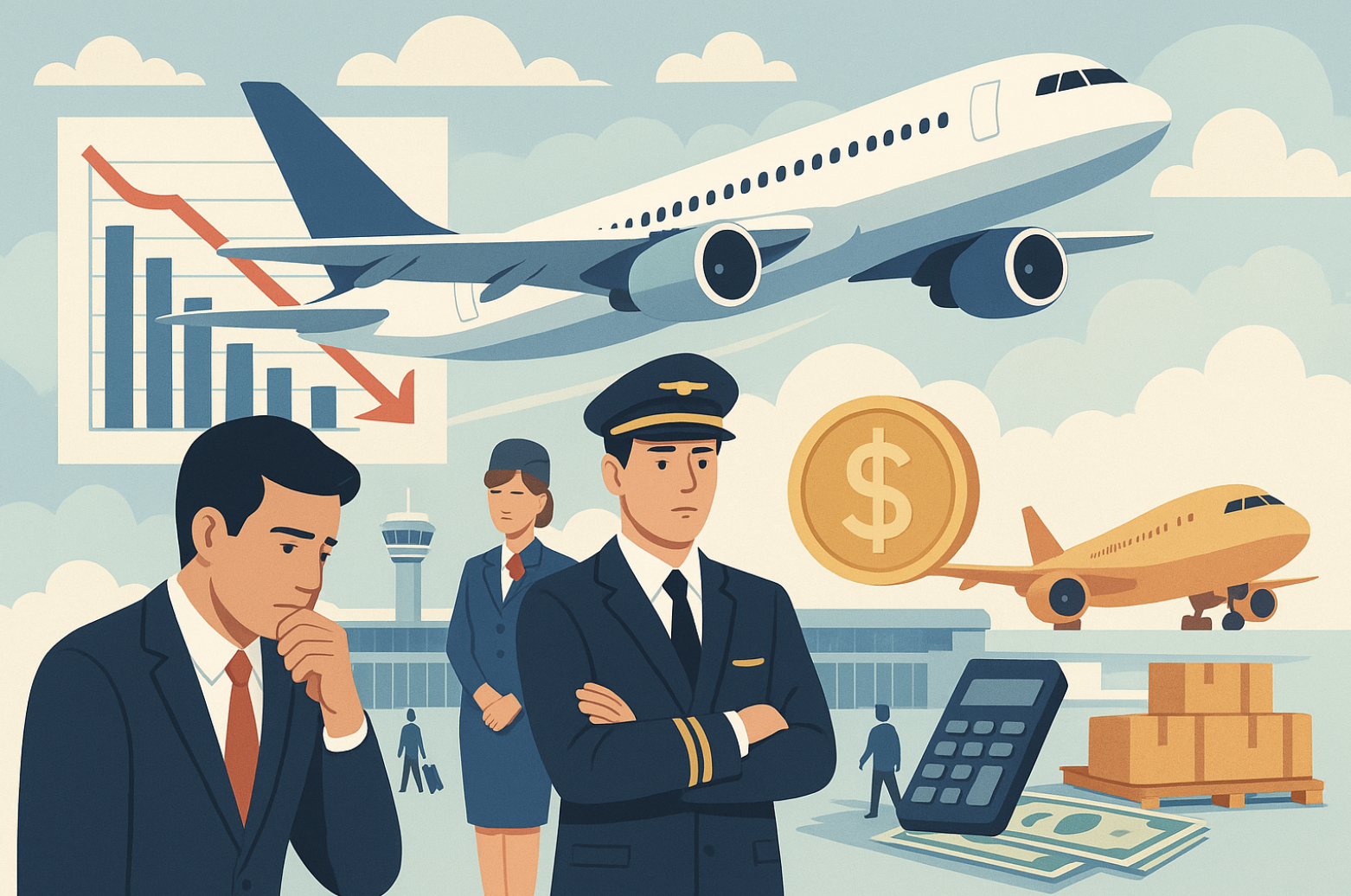
< 일러스트 OpenAI의 DALL·E 제공 >
[객원 에디터 10기 / 김시헌 기자] While the airline industry often appears glamorous, operating an airline ranks among the most financially challenging endeavors in the global economy. Every day, thousands of flights connect cities and continents, carrying millions of passengers and vast amounts of cargo. However, behind every takeoff and landing is an intricate economic and cost management strategy that determines whether an airline thrives or fails.
To passengers, airlines appear highly profitable given the high ticket prices and consistently full flights. The reality, however, tells a different story. Most airlines operate on razor-thin profit margins of just 2% to 5%, meaning that for every $100 in revenue, only $2 to $5 represents actual profit. This narrow margin exists because aviation faces some of the highest operating costs of any industry, encompassing aircraft acquisition or leasing, jet fuel, maintenance, airport fees, and staff wages.
Among the numerous factors influencing airline finances, aircraft-related expenses represent the largest burden. Acquiring a single commercial aircraft can cost hundreds of millions of dollars. Airlines typically finance these purchases through operating leases, loans, or sale-and-leaseback agreements – arrangements that help preserve cash flow and operational flexibility. Beyond aircraft acquisition, airlines face substantial ongoing expenses. Fuel alone accounts for 25-35% of total operating costs. Additionally, airlines pay fees for virtually every airport operation: takeoffs, landings, gate usage, and taxiing. Other major costs include maintenance, crew salaries, and insurance.
Given these financial pressures, airlines prioritize fuel-efficient aircraft such as the Boeing 787-9 and Airbus A350, while also optimizing crew scheduling and fuel management strategies. Despite high expenditures, ticket sales remain the primary revenue source. Airlines employ dynamic pricing systems that adjust fares based on demand, timing, and competition, maximizing revenue from every available seat. Interestingly, premium cabins (first and business class) generate the bulk of profits, while economy class primarily covers operational costs. This economic reality has driven airlines to enhance business class offerings with extensive amenities and premium services.
Additional revenue comes from cargo operations and charter flights, which help offset seasonal fluctuations in passenger demand. Yet even with billions in annual revenue, those thin profit margins of 2-5% make precise financial management essential for survival.
Beyond flight operations, airlines generate significant income from partnerships, loyalty programs, and financial services – revenue streams that often prove more stable and profitable than ticket sales themselves. Frequent flyer programs represent a major financial asset. Airlines sell miles or points to banks, credit card companies, and retailers, receiving immediate cash while the miles are redeemed for flights later. Co-branded credit cards, such as those offered by major carriers partnering with global banks, provide another powerful income source. Airlines earn revenue each time customers use these cards and accumulate points, strengthening both profitability and customer loyalty.
Furthermore, global alliances such as Star Alliance, SkyTeam, and Oneworld enable airlines to share routes, lounges, marketing efforts, and even revenue on popular international flights. These collaborations expand global reach without the capital investment required for new aircraft or routes, while building trust and unity among member airlines. Together, these partnerships and financial programs create a robust secondary revenue foundation that balances the risks and uncertainties inherent in core flight operations.
The airline industry’s financial complexity reveals that success requires tactics such as strategic partnerships, operational efficiency, and sophisticated revenue management to navigate one of the world’s most challenging business environments. Whether through investing in fuel-efficient aircraft, developing lucrative loyalty programs, or forging strategic alliances, airlines operate in a perpetual state of financial optimization. For an industry that connects the world and enables global commerce, the economics behind each flight represent a fascinating intersection of finance and strategic planning.