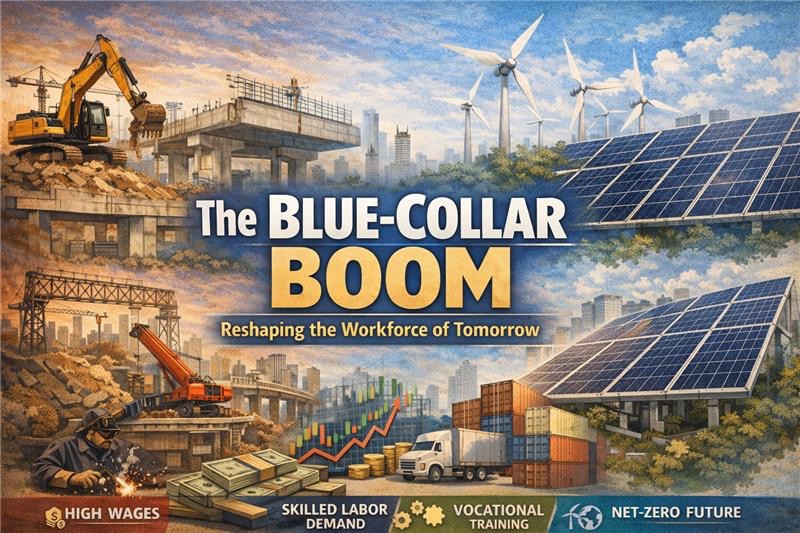

< 일러스트 OpenAI의 DALL·E 제공 >
[객원 에디터 10기 / 김예슬 기자] The working field can broadly be divided into two categories: white-collar jobs and blue-collar jobs. White-collar jobs typically refer to positions performed in office settings that involve solving intellectual tasks. These roles often require degrees or certifications as part of their education, and demand specialized skills and expertise. Most white-collar positions offer relatively higher salaries with potential for bonuses. On the other hand, blue-collar jobs require more manual labor and physical tasks. While they generally do not require degrees or higher education, they may require vocational training or skills. They have on-site locations, follow fixed schedules, and offer competitive salaries, often on an hourly basis. Historically, white-collar jobs have been considered “better” due to their higher pay, lower physical labor, and prestige. However, this perception is gradually shifting. The demand for blue-collar jobs has been rising globally, namely the blue-collar boom.
Tracking this trend back to the COVID-19 pandemic, jobs like construction, manufacturing, and logistics found opportunities for growth. In the U.S., the “Bipartisan Infrastructure Law has injected billions of dollars into infrastructure projects, significantly increasing the need for skilled workers in fields such as construction.” This law is a five-year federal investment of about $1.2 trillion, “aimed at rebuilding roads, bridges, and rails, upgrading water infrastructure, expanding broadband internet, and tackling climate change.” Today, many blue-collar jobs offer competitive wages, “rivaling those of white-collar positions.” Along with these wages, younger generations are striving to work shorter hours outside of the conventional 9 to 6 traditional office work. Thus, more and more people today are choosing vocational training over the four-year college degree in their pursuit of a blue-collar career path. This trend has been significant but not limited to the States; countries in the Middle East are also experiencing this shift towards blue-collar workers.
Interestingly, global warming also contributes to this boom. The goal of net-zero emissions has raised the demand for skilled workers to build and maintain wind and solar energy plants. The global effort toward a cleaner Earth is expected to demand workers and jobs of manual labor for the next decade.
The blue-collar boom is reshaping labour markets worldwide. “As infrastructure spending increases and the green energy transition accelerates, this trend will likely have long-term effects on the economy and financial markets. Traders and investors who stay tuned to these developments are well-positioned to take advantage of the opportunities this global shift presents.”